Blog
Your Guide to the Best Herbal Cigarette Brands

What Are Herbal Cigarettes?
Herbal cigarettes are tobacco-free, nicotine-free smoking products made from a blend of dried herbs, flowers, and plant materials rather than tobacco leaves. In Canada, herbal cigarettes are most commonly used by adults who want a smoking-like ritual without nicotine or who are exploring alternatives to traditional tobacco products.
Unlike regular cigarettes, herbal cigarettes do not contain tobacco or added nicotine. They are designed to replicate the physical experience of smoking — holding a cigarette, inhaling, and exhaling smoke — without delivering nicotine.
This guide explains how herbal cigarettes work, what they are made from, how they differ from tobacco and other nicotine alternatives, and what Canadian consumers should know before choosing them.
Why Some Adults Choose Herbal Cigarettes
Herbal cigarettes appeal to a specific group of adult users for several non-medical, lifestyle-related reasons:
Desire for a nicotine-free smoking experience
Preference for plant-based or herbal products
Temporary transition away from tobacco
Cultural or ceremonial use
Interest in alternatives that maintain smoking rituals
It is important to note that herbal cigarettes are not smoking cessation products and are not marketed as safer or healthier than tobacco. They simply offer a different composition.
Key Benefits of Herbal Cigarettes
Choosing herbal cigarettes in Canada comes with several notable advantages:
1. Nicotine-Free & Non-Addictive
Traditional cigarettes contain nicotine, which is a highly addictive substance. Herbal cigarettes are free of nicotine, helping users avoid the cycle of addiction while still enjoying the familiar act of smoking.
2. No Harsh Chemicals or Additives
Most commercial tobacco cigarettes include chemical additives to enhance flavor, combustion, and shelf life. Herbal cigarettes use only natural plant materials — such as chamomile, mint, rose petals, or mullein — without artificial fillers.
3. A Smoother Smoking Experience
Many smokers report that herbal cigarettes feel milder on the throat and lungs compared to traditional tobacco cigarettes. This makes them suitable for beginners, casual smokers, or anyone looking for a gentler alternative.
4. A Support Tool for Quitting Smoking
Though not an official cessation therapy, herbal cigarettes can help smokers transition away from nicotine by mimicking the sensory experience of smoking a cigarette without reinforcing nicotine dependence.
5. Canadian-Friendly Options
At 1Smokes, we focus on products that comply with Canadian preferences for quality and safer inhalation alternatives, giving shoppers in Canada a trusted place to explore herbal smoking options.
What Are Herbal Cigarettes Made Of?
Herbal cigarettes are produced using a combination of dried plants. Ingredients vary by brand but commonly include:
Herbal leaves
Flower petals
Roots or bark extracts
Natural fibers used for rolling
Some products are lightly flavored using natural botanical extracts, while others remain unflavored to maintain a neutral taste.
Because there is no tobacco, herbal cigarettes do not contain nicotine. However, they are still combusted and produce smoke when lit.
Herbal Cigarettes vs Tobacco Cigarettes
Understanding the difference between herbal and tobacco cigarettes helps set realistic expectations.
Key Differences
| Feature | Herbal Cigarettes | Tobacco Cigarettes |
|---|---|---|
| Tobacco content | None | Contains tobacco |
| Nicotine | None | Contains nicotine |
| Purpose | Ritual / alternative | Nicotine delivery |
| Taste | Herbal or neutral | Tobacco-based |
While herbal cigarettes remove nicotine from the equation, they still involve combustion and inhalation of smoke.
Herbal Cigarettes vs Other Nicotine Alternatives
Some adult users compare herbal cigarettes with modern smoke-free alternatives.
Compared to Vapes
Vapes heat liquid rather than burning plant material and typically contain nicotine. Herbal cigarettes involve combustion and are nicotine-free.
Compared to Nicotine Pouches
Nicotine pouches are smokeless and placed orally. Herbal cigarettes retain the physical smoking ritual but contain no nicotine.
Each alternative serves a different preference and use case.
Popular Uses of Herbal Cigarettes
Herbal cigarettes are typically used in specific, non-daily contexts rather than as routine smoking products. Their appeal lies more in ritual, symbolism, or short-term substitution than in nicotine delivery.
Common use cases include:
Film, television, and theater productions, where actors require a smoking prop without nicotine or tobacco
Cultural, spiritual, or ceremonial practices that incorporate herbs or smoke symbolism
Temporary breaks from tobacco, where adults want to avoid nicotine while maintaining familiar hand-to-mouth rituals
Social environments where nicotine use is not desired but the act of smoking is part of the experience
Because herbal cigarettes do not deliver nicotine, they are not intended for daily nicotine replacement or long-term substitution for tobacco dependence.
How Herbal Cigarettes Fit Into the Smoking Alternatives Landscape
In Canada, adult consumers have access to a growing range of smoking and nicotine alternatives. Herbal cigarettes occupy a distinct position within this landscape.
Unlike vapes, which rely on vaporization rather than combustion, herbal cigarettes are burned similarly to traditional cigarettes. Unlike nicotine pouches, which are smokeless and discreet, herbal cigarettes preserve the visible smoke and tactile ritual.
This makes herbal cigarettes most relevant for adults who value behavioral familiarity over chemical stimulation. They are often chosen alongside — not instead of — other alternatives, depending on context and preference.
Taste, Aroma, and Sensory Experience
The sensory experience of herbal cigarettes differs noticeably from tobacco cigarettes. Because they contain no cured tobacco leaf, the aroma is typically lighter and more plant-forward.
Some users describe the taste as:
Earthy or botanical
Mildly bitter or neutral
Less lingering on clothing or breath
Flavored herbal cigarettes may incorporate subtle botanical notes, but most avoid strong artificial flavoring. Expectations should be adjusted accordingly, as herbal cigarettes are not designed to mimic the exact taste of tobacco.
Packaging, Labeling, and Transparency in Canada
Responsible retailers provide clear labeling for herbal cigarette products so adult consumers understand what they are purchasing.
Packaging may include:
Ingredient disclosures
Usage disclaimers
Age-restriction notices
Country of origin information
Because regulations can vary by province, availability and presentation may differ across Canada. Choosing established Canadian retailers helps ensure greater transparency and compliance awareness.
Common Misconceptions About Herbal Cigarettes
There are several misconceptions surrounding herbal cigarettes that are worth clarifying.
Myth: Herbal cigarettes are safe or healthy.
Fact: Herbal cigarettes are not marketed as safe or healthy alternatives. They simply do not contain tobacco or nicotine.
Myth: Herbal cigarettes are smoking cessation tools.
Fact: They are not approved or intended for smoking cessation.
Myth: Herbal cigarettes are the same as vapes.
Fact: Herbal cigarettes involve combustion, while vapes do not.
Understanding these distinctions helps set realistic expectations.
Environmental and Lifestyle Considerations
Some adult consumers are drawn to herbal cigarettes because of lifestyle preferences rather than nicotine-related factors.
Considerations may include:
Interest in plant-based materials
Avoidance of synthetic additives
Reduced interest in electronic devices
These factors are subjective and vary by individual, but they contribute to why herbal cigarettes maintain niche demand in Canada.
Are Herbal Cigarettes Legal in Canada?
Yes. Herbal cigarettes are legal to sell in Canada when they comply with federal and provincial regulations. They are regulated differently than tobacco products but may still be subject to labeling, packaging, and age-restriction requirements.
Availability may vary by province, and adult-only sales policies apply.
Who Herbal Cigarettes Are (and Are Not) For
May Appeal To:
Adults avoiding nicotine
Former smokers seeking ritual alternatives
Users exploring plant-based products
Not Intended For:
Minors
Individuals seeking nicotine satisfaction
Smoking cessation treatment
How to Choose Herbal Cigarettes
When evaluating herbal cigarette products, consider:
Ingredient transparency
Brand reputation
Flavor profile (if any)
Intended usage frequency
Choosing products from established Canadian retailers helps ensure clarity around labeling and availability.
Why 1Smokes Covers Smoking Alternatives
1Smokes provides informational resources on smoking alternatives to help adult consumers make informed decisions. Our content focuses on clarity, transparency, and current Canadian market availability without promoting misuse or unverified claims.
Final Thoughts
Herbal cigarettes occupy a unique space within the broader smoking alternatives landscape in Canada. They are tobacco-free, nicotine-free products designed for adults who value ritual over nicotine delivery. Understanding what they are — and what they are not — is essential before choosing them.
This guide is intended purely for informational purposes and does not provide medical or cessation advice.
FAQ's
Yes, herbal cigarettes are typically nicotine-free. They are designed as an alternative to traditional cigarettes and do not contain the addictive substance nicotine. However, it’s important to check the packaging or product information to ensure that the specific brand you’re considering is indeed nicotine-free
Yes, herbal cigarettes come in a variety of flavors. Brands often offer a range of options, including minty, fruity, herbal, and floral flavors. This diversity allows smokers to explore different tastes and find a flavor profile that suits their preferences.
Herbal cigarettes are generally considered a safer option than traditional cigarettes because they don’t contain tobacco and nicotine. However, it’s important to note that smoking in any form still carries health risks. Herbal cigarettes may produce fewer harmful chemicals and toxins than traditional cigarettes, but they are not completely risk-free.
Some herbal cigarettes are marketed as having potential health benefits due to the natural herbs used in their composition. For example, certain herbs like mint and chamomile are known for their calming and soothing properties. However, the health benefits of smoking herbal cigarettes are still debated, and it’s recommended to consult a healthcare professional before using them for health-related purposes.
You can purchase the herbal cigarette brands mentioned in this article from various sources. Many of these brands have official websites where you can place orders online. Additionally, some specialty tobacco or smoke shops might carry these brands. Always ensure you’re purchasing from reputable sources to get genuine products.
Related Articles
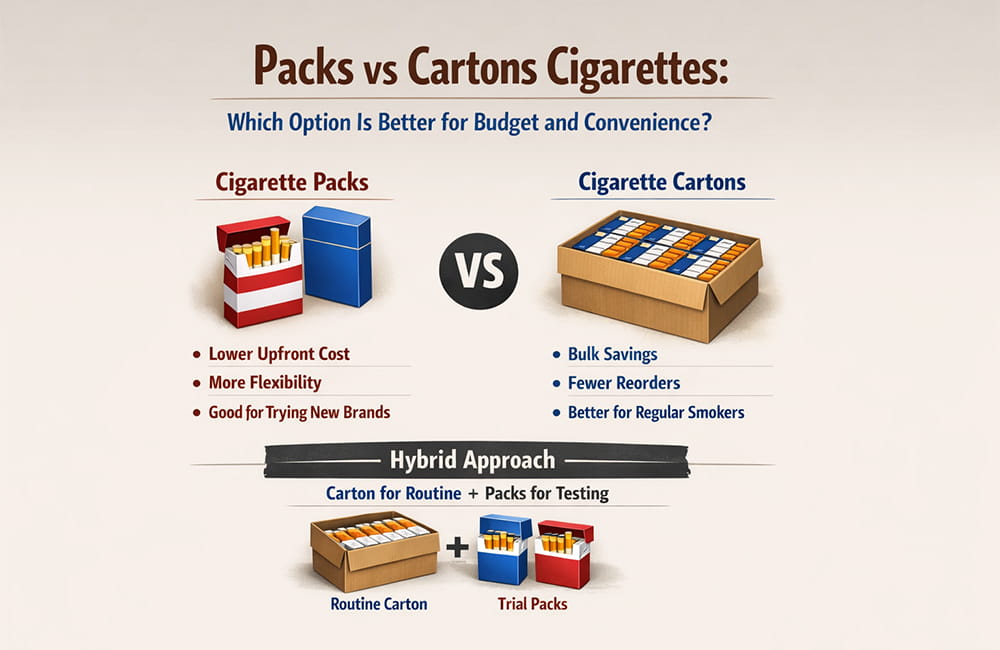
Packs vs Cartons Cigarettes: Which Option Is Better for Budget and Convenience?
Introduction If you regularly buy cigarettes, one of the most practical decisions you make is not just what brand to

Tobacco Regulations in Canada: What Consumers and Online Buyers Need to Know
Introduction Tobacco regulations in Canada are among the strictest in the world, designed to balance public health goals with legal

The Health Effects of Smoking in Canada: Comprehensive 2026 Guide
Smoking is the leading cause of preventable death in Canada. It causes over two dozen diseases, including lung cancer, heart disease, and COPD. Tobacco use contributes to approximately 48,000 deaths annually, impacting nearly every organ system in the human body.